
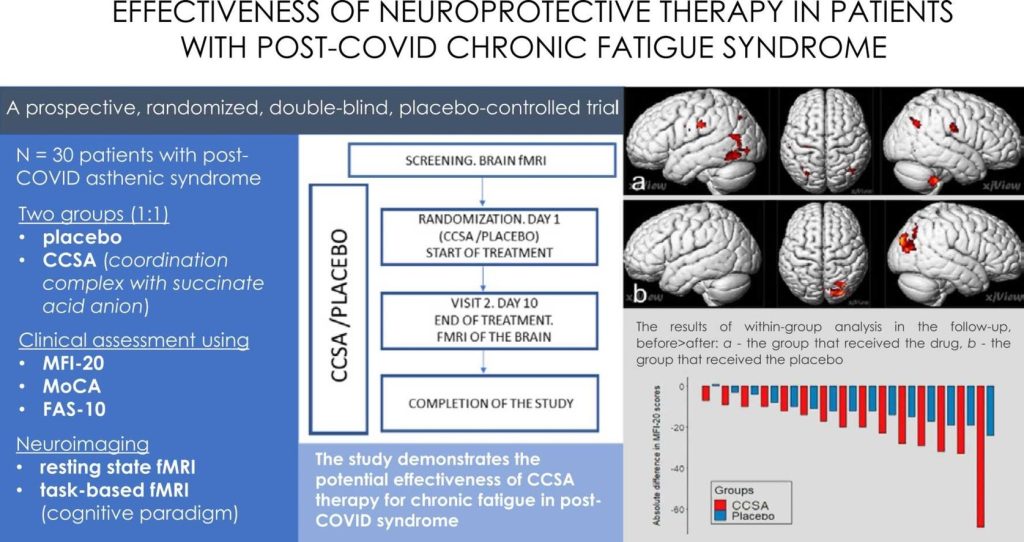
Данное исследование демонстрирует потенциальную эффективность терапии CCSA в отношении широкого спектра симптомов (синдром хронической усталости/астенический синдром и когнитивные нарушения) у пациентов с постковидным синдромом. Впервые продемонстрирована эффективность нейропротекторной терапии после постковидного астенического синдрома с использованием высокотехнологичных методов нейровизуализации.
A prospective randomized, double-blind placebo-controlled study to evaluate the effectiveness of neuroprotective therapy using functional brain MRI in patients with post-covid chronic fatigue syndrome
Abstract
Background and purpose
to assess executive network using resting-state fMRI and patterns of brain activation using task fMRI with a cognitive paradigm, against the background of taking the drug in comparison with placebo in patients with post-COVID asthenic syndrome.
Methods
The study employed a prospective, randomized, double-blind, placebo-controlled trial approach to assess the efficacy of utilizing functional MRI of the brain as a neuroprotective therapy for treating patients with chronic fatigue syndrome following COVID-19. The study included 30 patients matched by sex and age with post-COVID asthenic syndrome. All patients were examined with MFI-20, MoCA, FAS-10 scales, MRI using a Siemens MAGNETOM Prisma 3 T scanner before and after a course of therapy with coordination complex with succinate acid anion (CCSA) or placebo (15 patients each) using resting state fMRI and with cognitive paradigm.
Results
The changes obtained as a result of the treatment of post-Covid asthenic syndrome demonstrated clinical superiority in the reduction of asthenic symptoms for the group of patients treated with CCSA (MFI-20 scores: −20·0 points in the CCSA group compared to −12 points in the placebo group, p = 0·043). The data obtained also correlate with the analysis of task fMRI and resting state fMRI may indicate an increase in the functional cognitive status after a course of therapy with CCSA. Clinically, this correlates with a statistically significant improvement in the MoCA score (2 points in the CCSA group compared to 1 point in the placebo group, p < 0·05).
Conclusions
the study demonstrates the potential effectiveness of CCSA therapy in relation to a wide range of symptoms (chronic fatigue syndrome/ asthenic syndrome and cognitive impairment) in patients with post-COVID syndrome. The first time demonstrated the effectiveness of neuroprotective therapy after post-COVID asthenic syndrome with the use of high-tech neuroimaging techniques.